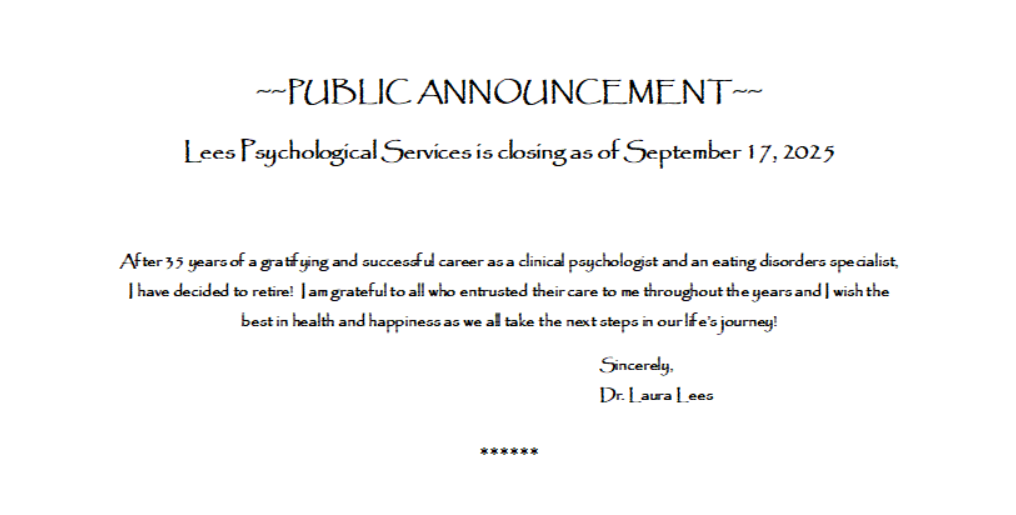
Phone: Office is Closed | Email: Office is Closed

To obtain a copy of your medical record:
General Information:
All medical records are maintained in paper format and can only be provided in the same format. An electronic version of any kind is not available. Each progress note is double sided and consists of two pages.
The patient, guardian or facility requesting the record is responsible for paying the cost of the record prior to it being copied and mailed.
The patient (or guardian) must upload a copy of their valid Driver's License or a valid form of state identification with the Release of Information form found in the link below.
Cost:
These are the charges per page, plus postage pursuant to Wis. Stat. §146.83 (3f) (c) 2:
- First 25 pages: $1.08 per page
- Pages 26-50: $0.80 per page
- Pages 51-100: $0.53 per page
- Pages 101 and above: $0.31 per page
- Plus Postage
Payment:
When the request for your medical record is received, cost of copying and postage will be provided. Once payment is received, the record will be sent within 30 days.
If it is not possible to provide the record in 30 days, notification will be provided regarding the reason for the delay and the approximate timeframe the record can be expected to be received.
Click here for release of information form
Instructions:
- Complete both pages of the Release of Information form
- Have someone you know witness your signature
- Upload both pages and a copy of patient/guardian valid Driver's License (or state identification)
- Email the form and your identification to: leespsych@gmail.com
- Wait for reply with cost of copying and mailing the record
- Instructions for submitting payment will be provided.
Questions:
For questions about receiving your medical record, please call 414-779-6878 or send an email to leespsych@gmail.com.
LPS Record Retention and Destruction Policy
In accordance with Wisconsin state law, medical records are retained for seven years from the date of the last therapy appointment. Classified ads are placed in the Milwaukee Journal Sentinel to announce the date records will be destroyed and the deadline for making record requests.
LPS medical records are destroyed by a certified document destruction company that meets HIPAA shredding requirements for privacy and security.
Records of all LPS patients discharged prior to 2018 have been destroyed.
This is the schedule for the destruction of records for patients discharged between 2018 - 2025:
- If the last therapy appointment was in 2018, the record will be destroyed in January 2026
- If the last therapy appointment was in 2019, the record will be destroyed in January 2027
- If the last therapy appointment was in 2020, the record will be destroyed in January 2028
- If the last therapy appointment was in 2021, the record will be destroyed in January 2029
- If the last therapy appointment was in 2022, the record will be destroyed in January 2030
- If the last therapy appointment was in 2023, the record will be destroyed in January 2031
- If the last therapy appointment was in 2024, the record will be destroyed in January 2032
- If the last therapy appointment was in 2025, the record will be destroyed in January 2033